There’s a noticeable pattern in B2B SaaS over the last few years: the companies growing fastest are not necessarily the ones with the best product alone, but the ones closest to the right conversations at the right events.
Across SaaS, revenue, marketing, and product teams, a small number of conferences repeatedly show up in deal flow stories, hiring pipelines, partnership discussions, and even fundraising narratives. The same events tend to surface in post-mortems on why a quarter overperformed, or where a key strategic relationship began.
What separates these gatherings is not scale or production value, but concentration — of decision-makers, operational knowledge, and real commercial intent. Some are built around early-stage capital and category creation. Others are anchored in revenue execution, enterprise selling, or lifecycle optimisation. A few sit at the intersection of all three.
Taken together, they form a practical map of where SaaS companies actually move forward — not in theory, but in measurable growth, stronger positioning, and better execution discipline.
Methodology used for ranking and selection
The ranking of these B2B SaaS events is based on a practical, operator-informed view of how these conferences actually perform in real-world SaaS growth, rather than popularity alone or event size.
- Influence within the SaaS ecosystem – Prioritises events that consistently shape conversations around SaaS growth, GTM strategy, fundraising, and scaling methodologies across global markets.
- Concentration of decision-makers – Weights events based on the density of founders, C-level executives, revenue leaders, investors, and operators who directly influence buying, hiring, or investment decisions.
- Commercial outcomes and ROI potential – Evaluates how effectively the event translates into tangible outcomes such as pipeline generation, partnerships, fundraising opportunities, or market expansion.
- Depth and practicality of content – Favors events that go beyond high-level inspiration and instead deliver actionable, operator-led insights that can be applied directly to SaaS businesses.
- Global relevance and ecosystem reach – Considers whether the event is regionally focused or globally influential, and how effectively it connects SaaS companies across different markets and growth stages.

Location and timing
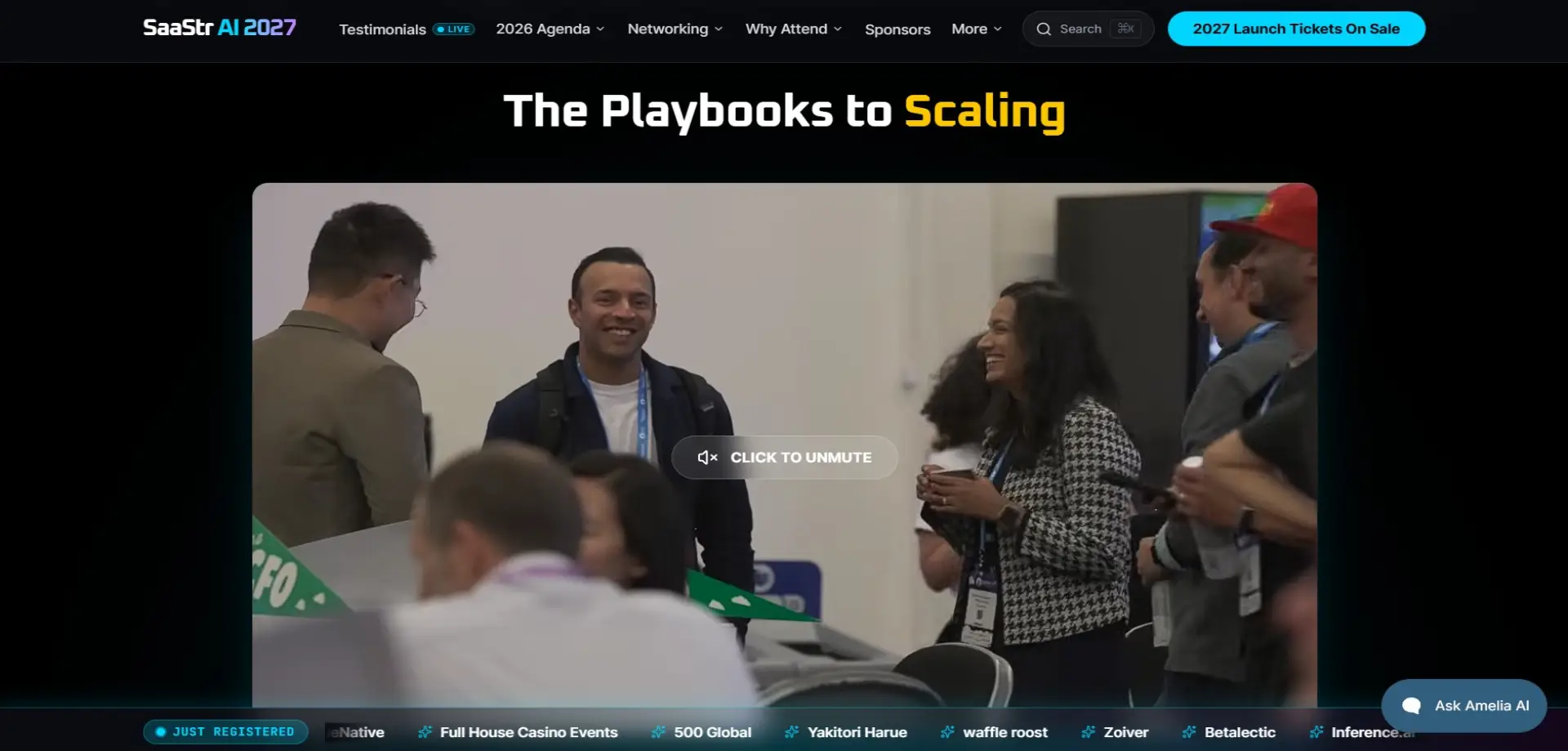
SaaStr Annual is held in the United States, typically in the San Francisco Bay Area, one of the world’s most influential software and venture capital ecosystems. The event is generally scheduled during the third quarter of the year, attracting thousands of SaaS professionals from across North America, Europe, Asia-Pacific, and emerging technology markets.
Its location places attendees within direct reach of founders, operators, investors, and technology leaders who continue to shape many of the trends influencing the global software industry.
Why this event ranks here
No event has had a greater influence on the modern B2B SaaS industry than SaaStr Annual. While many technology conferences include software as a topic, SaaStr was built specifically for SaaS operators and has spent years refining content around the realities of building and scaling recurring-revenue businesses.
The event has become a gathering point for the people responsible for some of the industry’s most successful growth stories. Discussions tend to focus on practical challenges rather than theoretical trends, covering topics such as revenue growth, customer retention, pricing strategy, AI adoption, product development, and organisational scaling.
Its ability to consistently attract experienced operators, investors, and executive leaders gives it a level of relevance that few SaaS-focused conferences can match.
Who attends
SaaStr Annual attracts a highly concentrated audience of decision-makers from across the SaaS ecosystem.
Attendees commonly include:
- Founders and CEOs of SaaS companies
- Chief Revenue Officers and sales leaders
- Marketing and demand generation executives
- Customer success and retention specialists
- Product and engineering leaders
- Venture capital investors
- Corporate development teams
- Technology partners and channel leaders
Unlike broader technology events, the attendee base is heavily weighted towards professionals actively involved in building, selling, operating, or investing in software businesses.
What makes it valuable for B2B SaaS companies
The value of SaaStr Annual extends well beyond keynote sessions.
For startups, the event provides opportunities to meet investors, gain exposure, and learn directly from operators who have successfully navigated similar growth challenges.
Growth-stage companies often use the conference to benchmark their go-to-market strategies, explore partnership opportunities, and gain insight into how peers are approaching sales efficiency, customer retention, and product expansion.
Enterprise software vendors benefit from access to potential customers, technology partners, and strategic relationships that can support long-term growth initiatives.
The event is particularly respected for delivering tactical insights that attendees can apply immediately, rather than focusing solely on high-level industry commentary.
Standout sessions and networking opportunities
One of SaaStr Annual’s greatest strengths is the balance between formal learning and informal networking.
Attendees can expect:
- Executive-led keynote presentations
- Tactical workshops and operator sessions
- Founder roundtables
- Investor networking opportunities
- Product and AI-focused discussions
- Revenue leadership forums
- Customer success workshops
- Partner and ecosystem networking events
Many attendees view the conversations taking place between sessions, during networking events, and at associated side gatherings as equally valuable as the official programme.
Best suited for
SaaStr Annual is particularly well suited to:
- Early-stage SaaS startups seeking growth frameworks
- Venture-backed software companies preparing to scale
- Growth-stage SaaS organisations refining go-to-market strategies
- Revenue and customer success leaders
- Product and operations executives
- Venture capital firms and angel investors
- Enterprise software vendors pursuing partnerships and market expansion
For organisations looking to attend a single SaaS-focused event, SaaStr Annual remains one of the strongest options available. Its combination of operator-led content, influential attendees, and practical business insights continues to make it one of the most important gatherings in the global B2B SaaS calendar.
2. SaaStock

Location and timing
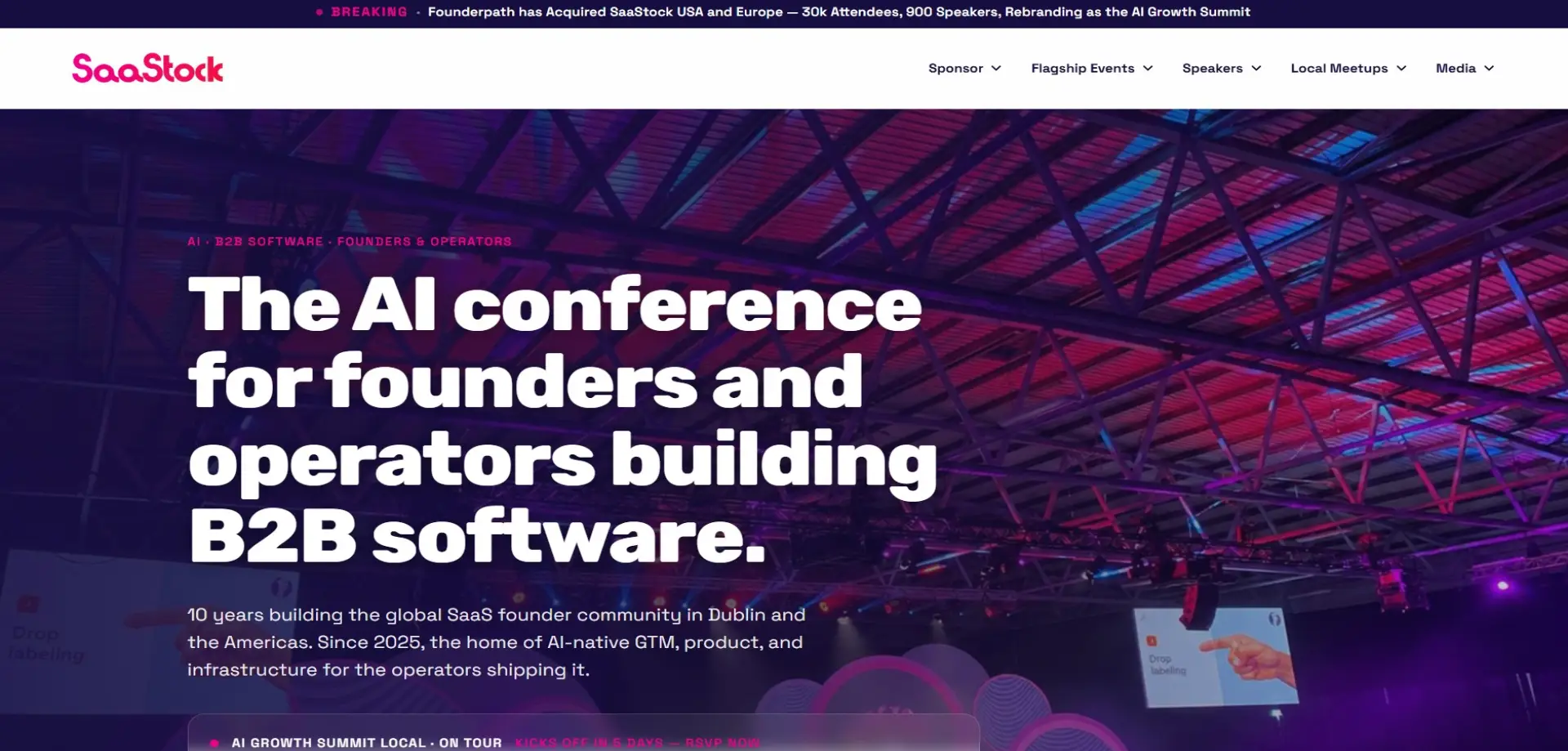
SaaStock is held in Ireland, with its flagship conference taking place in Dublin. The event is typically scheduled in the autumn and has become one of Europe’s most recognised gatherings for SaaS founders, executives, investors, and go-to-market leaders.
Its location gives attendees access to a thriving European technology ecosystem while drawing participants from North America, the Middle East, and Asia-Pacific. For companies looking to understand software markets beyond the United States, SaaStock provides a valuable international perspective.
Why European SaaS leaders prioritise it
While SaaStr dominates many conversations in North America, SaaStock has established itself as Europe’s premier SaaS-focused event. The conference was created specifically to address the opportunities and challenges facing software companies operating across diverse markets, languages, regulatory environments, and buyer behaviours.
The event consistently attracts influential SaaS founders and executives who share practical lessons from scaling companies internationally. Rather than focusing solely on Silicon Valley success stories, SaaStock provides insights that are highly relevant to businesses expanding across Europe and beyond.
Its emphasis on sustainable growth, operational excellence, and international market expansion makes it particularly valuable for organisations navigating increasingly competitive software markets.
The calibre of attendees
SaaStock attracts a strong mix of strategic decision-makers and growth-focused operators.
Attendees commonly include:
- SaaS founders and executive teams
- Revenue and sales leaders
- Marketing executives
- Customer success professionals
- Venture capital and private equity investors
- Product leaders
- Partnerships and alliances teams
- Enterprise technology buyers
A notable characteristic of the event is the accessibility of senior leaders. The conference maintains a reputation for facilitating meaningful conversations rather than creating barriers between speakers and attendees.
Where the business value comes from
For many organisations, SaaStock serves as both a learning opportunity and a commercial growth platform.
Founders gain exposure to investors, advisors, and peers who have successfully navigated fundraising, expansion, and scaling challenges. Revenue teams benefit from discussions around modern go-to-market strategies, sales efficiency, and customer acquisition trends.
The conference is also a strong environment for partnership development. Technology vendors, consultants, service providers, and software companies frequently use the event to build relationships that extend well beyond the conference itself.
Companies exploring international growth often find particular value in the breadth of market perspectives represented throughout the event.
Beyond the main stage
The official agenda is only part of the attraction.
SaaStock is known for creating multiple opportunities for meaningful engagement through:
- Founder-focused networking events
- Investor matchmaking sessions
- Executive dinners and roundtables
- Workshops and masterclasses
- Startup showcases
- Community meetups
- Industry-specific networking gatherings
Many attendees arrive with a full schedule of side meetings, making the event as much about relationship-building as conference content.
Best suited for
SaaStock is especially valuable for:
- European SaaS companies seeking growth strategies
- Startups preparing for fundraising
- Scale-ups entering new markets
- B2B software companies pursuing international expansion
- Revenue and marketing leaders
- Venture capital investors
- Partnership and ecosystem teams
For SaaS organisations looking beyond a purely North American perspective, SaaStock offers one of the strongest opportunities to learn how successful software companies are scaling across multiple regions, markets, and customer segments.
3. B2BMX
Location and timing
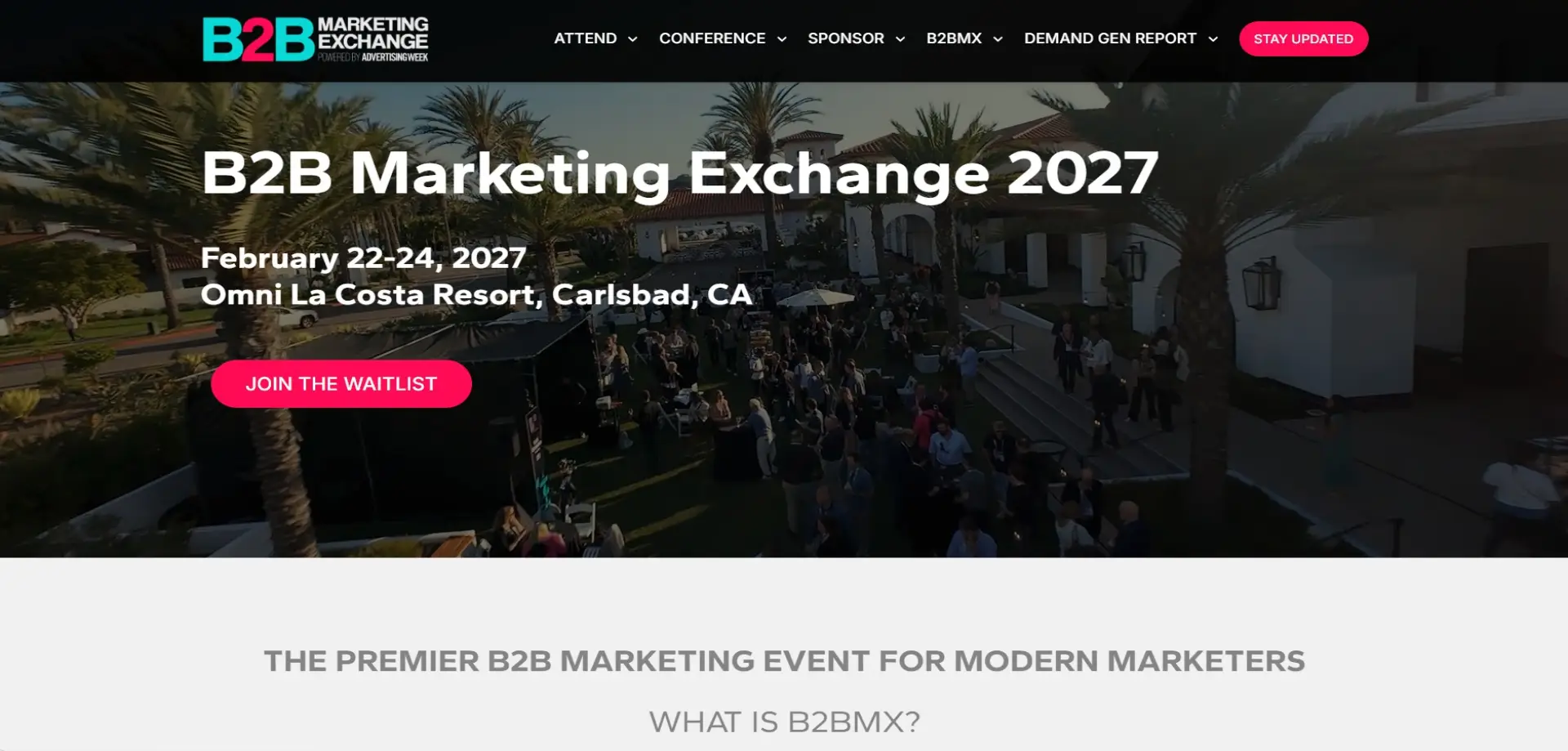
B2B Marketing Exchange (B2BMX) is held in the United States, typically in Scottsdale, Arizona, during the first quarter of the year. The event has become one of the most established gatherings for B2B marketing, demand generation, revenue operations, and customer engagement professionals.
Its early-year timing makes it particularly useful for organisations refining their marketing strategies, technology investments, and revenue plans for the year ahead.
Why it matters to modern SaaS growth teams
B2BMX occupies a unique position within the event landscape because it focuses on the disciplines that drive sustainable software growth. While many SaaS conferences concentrate on founders, fundraising, or product development, B2BMX centres on the practical realities of generating demand, nurturing prospects, and converting pipeline into revenue.
As customer acquisition costs continue to rise and buying journeys become more complex, SaaS organisations increasingly rely on sophisticated marketing operations, content strategies, and account-based programmes. B2BMX consistently addresses these challenges through sessions that blend strategic thinking with operational execution.
For companies seeking to improve marketing performance rather than simply follow industry trends, the event remains highly relevant.
The audience you can expect to meet
The conference attracts professionals responsible for driving measurable business growth.
Typical attendees include:
- Chief Marketing Officers
- Demand generation leaders
- Revenue operations professionals
- Account-based marketing specialists
- Marketing technology teams
- Sales and marketing alignment leaders
- Customer marketing professionals
- SaaS founders and growth executives
Many attendees are directly responsible for pipeline creation and revenue contribution, which creates an environment focused on performance and outcomes rather than theory.
Areas where attendees gain the most value
B2BMX tends to be at its strongest when it moves away from theory and into how revenue is actually generated inside modern B2B organisations.
Marketing teams usually come in looking for ideas on campaign performance, but leave with a clearer understanding of how tightly connected demand generation now is with sales execution and revenue outcomes. Account-based approaches, lifecycle orchestration, and pipeline accountability come up repeatedly, not as buzzwords but as operating realities.
On the revenue side, there is often a shift in thinking around how alignment actually works in practice. It’s less about organisational charts and more about how work flows between teams without breaking conversion efficiency.
What stands out is how often the discussions circle back to execution discipline. Small improvements in structure, timing, and handoffs are consistently framed as more impactful than large strategic overhauls.
Learning experiences beyond keynote presentations
B2BMX is widely recognised for the depth of its educational content.
Attendees can participate in:
- Practitioner-led workshops
- Revenue-focused case studies
- Interactive breakout sessions
- Peer discussion groups
- Technology demonstrations
- Executive networking events
- Industry roundtables
Many sessions feature detailed examples from organisations actively implementing the strategies being discussed, providing practical lessons that can be applied immediately.
Best suited for
B2BMX is especially relevant for:
- B2B SaaS marketing teams
- Demand generation specialists
- Revenue operations leaders
- Account-based marketing practitioners
- Customer marketing teams
- Growth-stage software companies
- Enterprise SaaS organisations seeking pipeline efficiency
For SaaS businesses looking to strengthen the connection between marketing activity and revenue outcomes, B2BMX offers one of the most focused and practical learning environments available. Its concentration of marketing and revenue expertise makes it especially valuable for organisations seeking measurable improvements in customer acquisition and growth performance.
4. SaaSiest
Location and timing
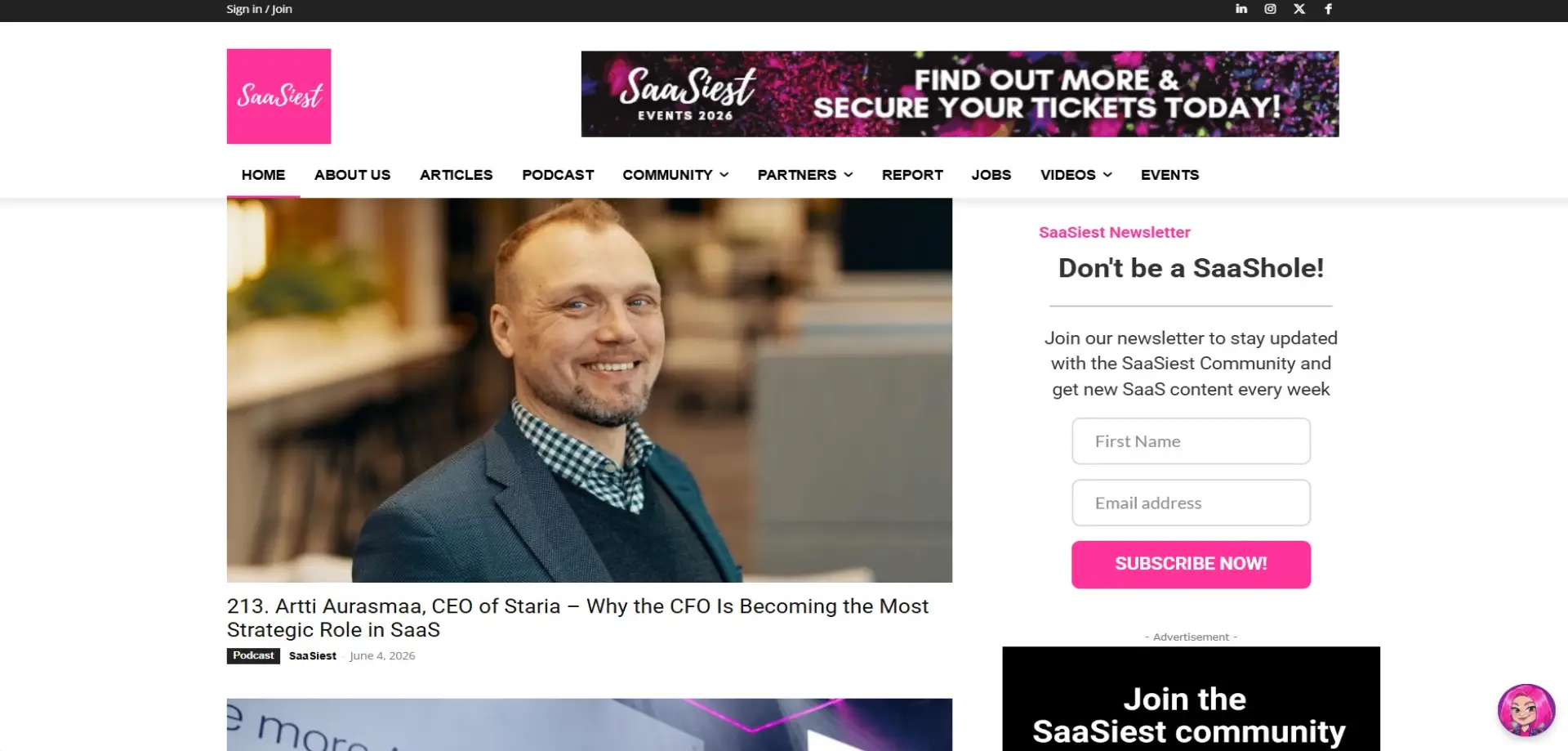
SaaSiest is held in Malmö, Sweden, typically in late spring. It has grown into one of Europe’s most respected SaaS-focused gatherings, drawing founders, operators, and investors from across the Nordic region and broader European software ecosystem.
Its timing in the calendar positions it well after early-year planning cycles, making it a strong checkpoint event for refining growth strategy, product direction, and go-to-market execution mid-year.
Why it stands out in the European SaaS ecosystem
SaaSiest has built its reputation on being deliberately operator-led rather than investor-led or vendor-heavy. The content tends to reflect the realities of scaling SaaS companies in Europe, where efficiency, capital discipline, and international expansion often play a more prominent role than rapid, US-style growth narratives.
The event is particularly known for its strong community feel. Instead of large, impersonal stages, SaaSiest has historically focused on curated conversations where founders and operators exchange honest perspectives on what is actually working in their businesses.
This creates an environment where discussions are less about hype and more about execution.
The type of professionals who show up
The audience is highly concentrated around SaaS operators and leadership teams actively involved in scaling companies.
Typical attendees include:
- SaaS founders and co-founders
- Chief executive and commercial leaders
- Heads of sales and revenue operations
- Product and growth leaders
- Early-stage and growth-stage investors
- SaaS operators from high-growth European companies
- GTM and partnerships professionals
Compared to larger global conferences, SaaSiest tends to have a tighter operator-to-vendor ratio, which keeps conversations focused on practical execution challenges.
Where SaaSiest delivers real commercial value
What makes SaaSiest distinctive is the lack of polish in the conversations — in a positive sense. People tend to speak quite openly about what is and isn’t working in their businesses, which creates a more grounded learning environment than most SaaS conferences.
Founders often compare notes on very specific challenges: pricing decisions that didn’t land, hiring mistakes, or go-to-market motions that looked good on paper but didn’t scale. That level of honesty makes it easier to benchmark against companies that are genuinely in similar stages.
There is also a strong undercurrent of practicality. Rather than abstract frameworks, the discussions usually come back to how teams are actually operating day to day under real constraints.
The value, for most attendees, is less about taking home “new ideas” and more about recalibrating expectations around what good execution looks like in practice.
Format, discussions, and networking style
Unlike larger conferences that rely heavily on stage programming, SaaSiest places significant weight on structured interaction and peer exchange.
Key formats typically include:
- Founder-led roundtables
- Small-group discussions
- Operator workshops
- Investor-founder sessions
- Candid fireside chats
- Informal networking sessions
- Community-driven meetups
The emphasis is less on scale and more on depth of conversation, which is a defining feature of the event’s identity.
Best suited for
SaaSiest tends to be most useful for:
- Early-stage SaaS founders in Europe
- Growth-stage software companies scaling internationally
- Revenue and go-to-market leaders
- Product-led growth teams
- SaaS investors focused on European markets
- Operators building efficient, capital-conscious growth models
For SaaS companies looking for practical, experience-driven insights rather than high-level industry narratives, SaaSiest offers one of the most grounded and operator-focused environments in the European SaaS conference circuit.
5. Slush
Location and timing
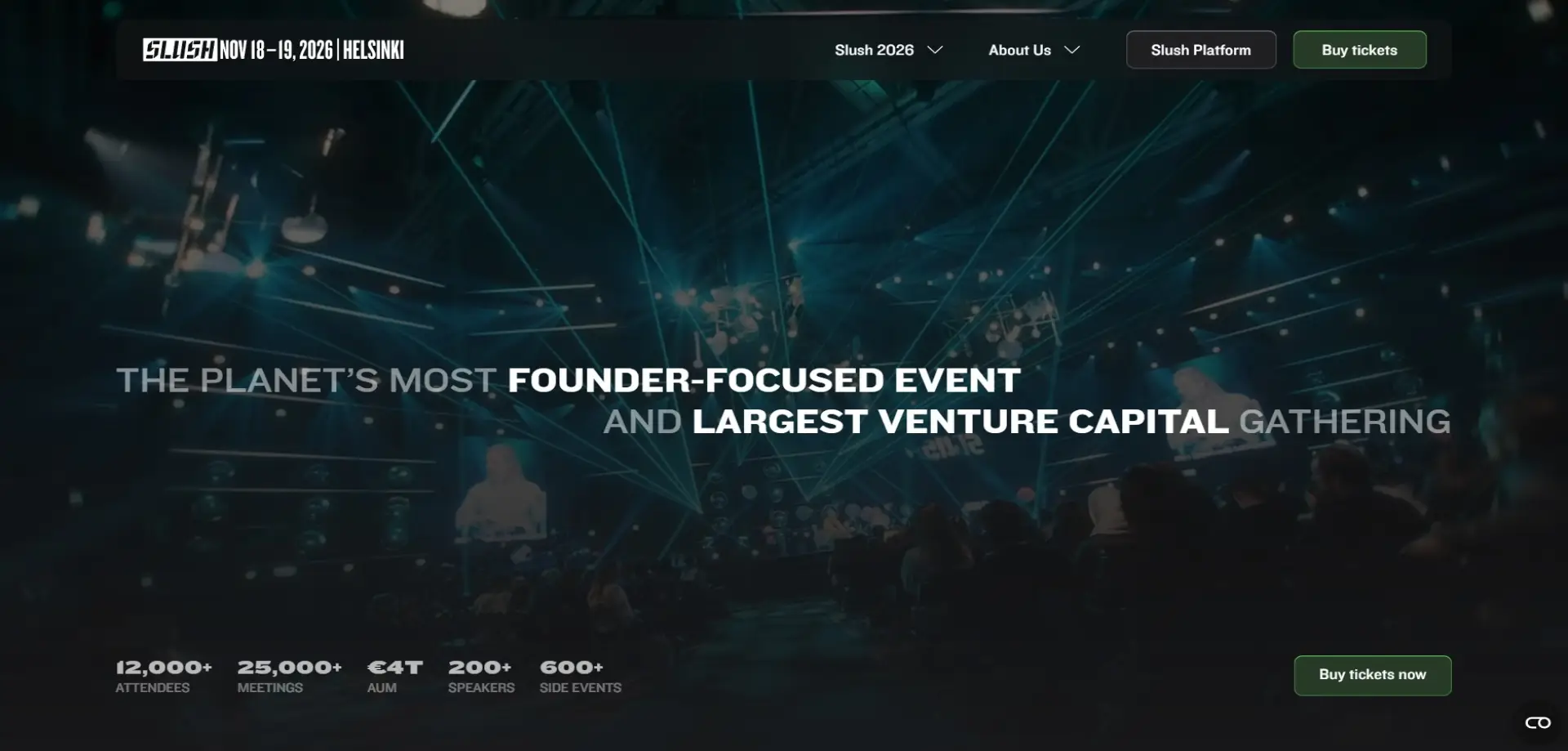
Slush is held in Helsinki, Finland, typically in November each year. It sits at a point in the SaaS calendar when many companies are closing fundraising conversations, reviewing annual performance, and setting direction for the year ahead.
The winter timing adds to its intensity, with a tightly compressed schedule that forces high-quality, high-intent conversations across a short timeframe.
Why it has become one of the most influential startup and SaaS events
Slush has evolved into one of the most founder- and investor-heavy gatherings in the global startup ecosystem. While it spans multiple industries, SaaS remains a dominant presence due to its scalability and strong alignment with venture-backed growth models.
Rather than focusing on passive learning, the event is structured around active company building. Founders are constantly testing narrative clarity, investor readiness, and market positioning in real time, which gives the event a distinctly execution-oriented feel.
Over time, it has become a key reference point for European SaaS companies and is often mentioned alongside SaaStr Annual, Web Summit, and TechCrunch Disrupt in terms of strategic importance.
The ecosystem represented at Slush
The attendee base is heavily weighted toward startups and capital providers, creating a high-density environment of founders, operators, and investors.
Typical participants include:
- Early-stage SaaS founders
- Growth-stage SaaS companies
- Venture capital investors
- Angel investors and family offices
- Startup operators and executive teams
- Product and growth leaders
- Corporate venture capital teams
- Accelerators and ecosystem builders
Where SaaS companies extract strategic advantage
Slush compresses exposure, feedback, and opportunity into a short, high-intensity window. For SaaS companies, this often results in rapid clarification of positioning, fundraising narrative, and expansion strategy.
Much of the value comes from how quickly assumptions are tested. Investor reactions, peer comparisons, and category-level discussions happen in parallel, which forces sharper thinking around strategy and messaging.
This typically leads to more informed decisions around capital raising, international growth, and market positioning, particularly for companies still refining their category identity.
The impact is rarely driven by isolated conversations. Instead, it builds through repeated exposure to how different stakeholders interpret the same product, market, and growth story, gradually sharpening how companies position themselves in competitive SaaS environments.
The format and structure of the event
The event is designed around structured interaction rather than passive attendance, with a strong emphasis on pre-planned engagement.
- Investor-founder matchmaking sessions
- Scheduled 1:1 networking meetings
- Keynote talks and curated stage content
- Startup booths and product showcases
- Informal ecosystem networking across venues
This structure ensures that most interactions are intentional, commercially focused, and time-efficient.
Best suited for
The event is especially valuable for teams operating in the following categories:
- Early-stage SaaS startups preparing for or actively raising capital
- Growth-stage SaaS companies expanding into international markets
- Founders refining positioning and narrative clarity
- Venture capital investors focused on European and global SaaS deal flow
- Corporate innovation and scouting teams
For these groups, Slush functions less as a conference and more as a high-density strategic environment where positioning, capital, and growth trajectories are actively shaped.

Location and timing
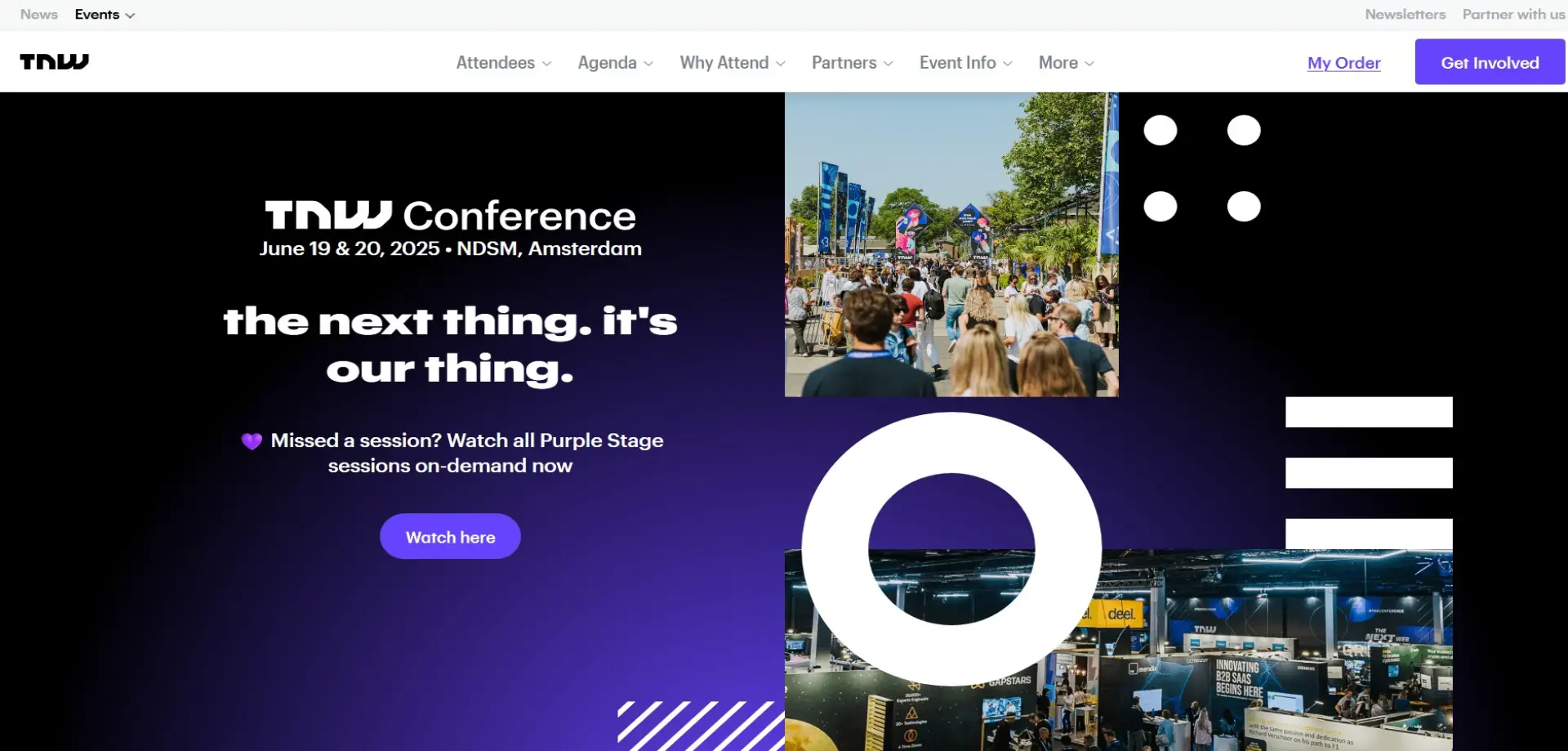
TNW Conference is held in Amsterdam, Netherlands, typically in June each year. It takes place at a mid-year point when many SaaS companies are actively refining product direction, scaling go-to-market execution, and reassessing growth strategy for the second half of the year.
The timing makes it particularly useful for teams that want to recalibrate strategy after Q1 and Q2 performance data has started to stabilise.
Why it remains highly relevant for SaaS and digital growth companies
TNW Conference sits slightly broader than a pure SaaS event, but its relevance to SaaS companies comes from its consistent focus on digital product innovation, scaling technology businesses, and emerging go-to-market models.
The event blends startup growth conversations with enterprise digital transformation themes, which makes it especially useful for SaaS companies operating in competitive, fast-evolving categories. Topics such as AI adoption, product-led growth, platform strategy, and digital infrastructure frequently intersect with SaaS business models.
Unlike niche SaaS-only conferences, TNW provides a wider lens on how technology ecosystems are evolving, which helps SaaS teams understand where product expectations and buyer behaviour are heading.
The ecosystem represented at TNW Conference
The attendee base spans startups, scale-ups, corporates, and investors, creating a broad but commercially relevant mix of stakeholders.
Typical participants include:
- SaaS founders and startup teams
- Scale-up executives and operators
- Venture capital investors and accelerators
- Product, engineering, and growth leaders
- Corporate innovation and digital transformation teams
- Technology journalists and analysts
- AI and infrastructure companies
This diversity creates a cross-pollination effect between SaaS, AI, and broader digital business models.
Where SaaS companies strengthen their position
The strategic value of TNW Conference comes from exposure to how SaaS fits within the wider digital economy rather than just within its own category. This broader perspective often helps companies refine how they position their product against adjacent technologies and shifting buyer expectations.
For many SaaS teams, the most useful insight comes from understanding how product innovation and AI adoption are reshaping user expectations across software categories. This often feeds directly into roadmap prioritisation and messaging refinement.
The event also provides useful benchmarking against both SaaS-native companies and broader digital platforms, which helps clarify where differentiation actually exists in increasingly crowded markets.
Event layout and format
TNW Conference blends structured stage content with interactive networking and product discovery environments.
- Keynote talks and thematic stage tracks
- Startup and scale-up showcases
- Investor and founder networking sessions
- Product and innovation exhibition zones
- Workshops and breakout discussions
This structure encourages both high-level strategic thinking and practical peer-level exchange.
Best suited for
The strongest fit tends to be:
- SaaS companies incorporating AI or platform strategies
- Growth-stage startups expanding internationally
- Product and engineering-led organisations
- Venture capital investors focused on deep tech and SaaS
- Corporate innovation and digital transformation teams
- Founders exploring cross-category positioning
For these groups, TNW Conference provides a wider strategic lens that helps situate SaaS growth within the broader evolution of digital products and infrastructure.
7. SubSummit
Location and timing
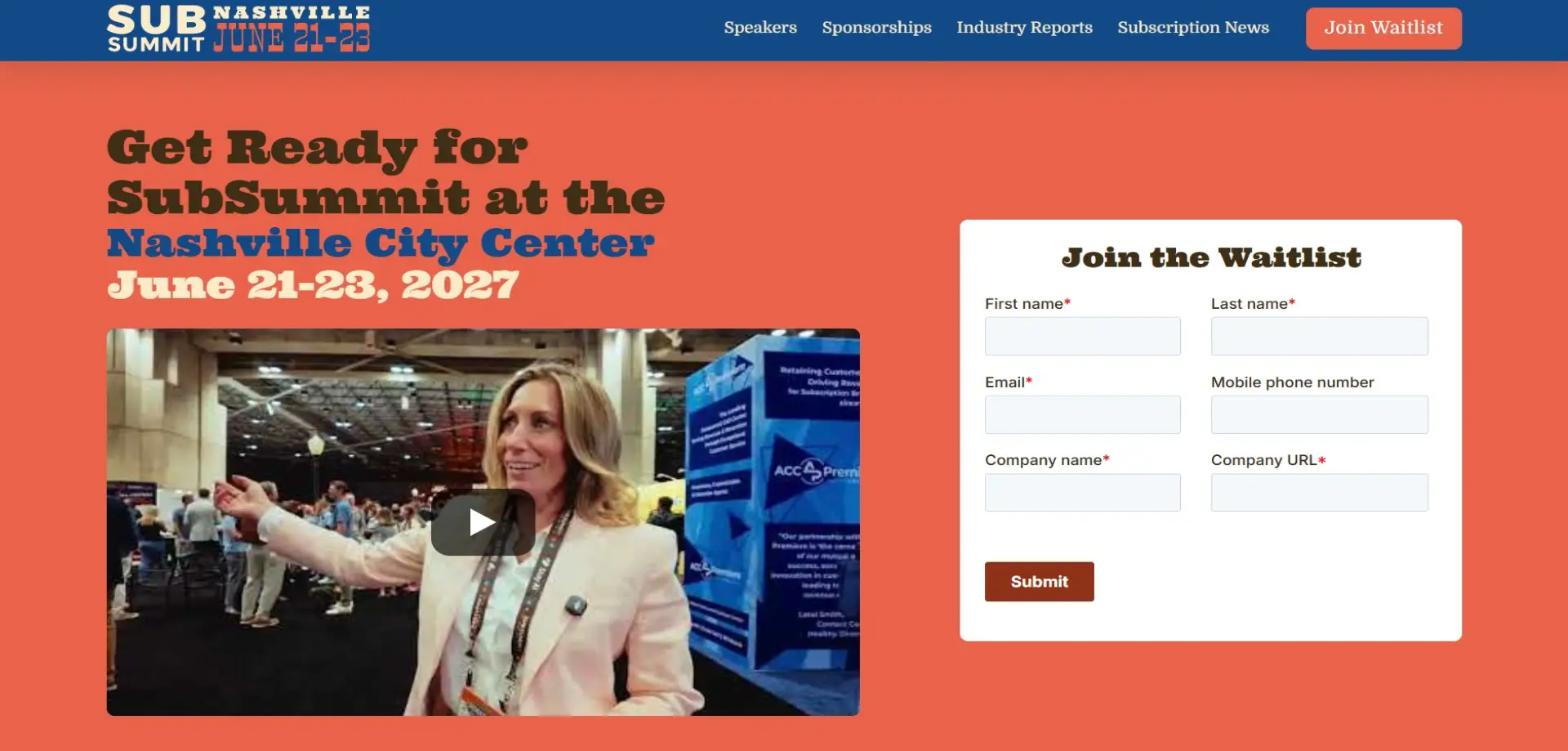
SubSummit is held in the United States, typically in Dallas, Texas, and usually takes place in late spring or early summer. It has become the leading conference dedicated specifically to the subscription economy, covering SaaS, subscription commerce, and recurring revenue business models.
Its US location reflects the maturity of subscription-based business models in North America, while still attracting a growing international audience from Europe and Asia-Pacific.
Why it is central to subscription-driven SaaS strategy
SubSummit is one of the few major events that treats subscription businesses as a distinct commercial discipline rather than a subset of broader SaaS or e-commerce conversations.
This matters because subscription success is rarely determined by acquisition alone. Retention, expansion revenue, churn reduction, pricing strategy, and customer lifecycle management are equally critical, and SubSummit consistently focuses on these mechanics in depth.
It is particularly strong on the operational realities of recurring revenue businesses, especially where SaaS intersects with subscription commerce, consumer subscriptions, and hybrid models.
The professionals you will typically find there
The event brings together a mix of SaaS operators, subscription commerce leaders, and growth professionals who are directly responsible for recurring revenue performance.
Typical attendees include:
- Subscription SaaS founders and executives
- Chief revenue officers and growth leaders
- Customer success and retention teams
- Product and pricing strategists
- Lifecycle marketing professionals
- E-commerce subscription brands
- Investors focused on recurring revenue models
- Analytics and revenue operations teams
This creates a highly focused environment where most conversations are directly tied to revenue performance and customer lifetime value.
Where the event delivers the most practical value
SubSummit is one of the few SaaS-adjacent events where nearly every conversation ties back to recurring revenue performance in a very direct way.
Retention, churn, onboarding, and expansion aren’t treated as separate topics — they are usually discussed as part of a single system that determines whether subscription revenue is stable or fragile.
Customer success and lifecycle teams tend to get a lot of value here, particularly in how onboarding and engagement strategies influence long-term customer behaviour. Pricing and packaging also come up frequently, especially in relation to improving lifetime value without increasing churn risk.
The most consistent takeaway is a sharper understanding of how revenue behaves over time, not just how it is acquired.
The structure and nature of engagement
The event is designed to encourage applied learning, with a strong emphasis on practitioner-led sessions.
Common formats include:
- Case study presentations from subscription businesses
- Customer success and retention workshops
- Pricing and monetisation deep dives
- Lifecycle marketing sessions
- Operator panels and fireside discussions
- Networking sessions focused on recurring revenue roles
- Vendor showcases for subscription tooling
The emphasis is consistently on what is working in real subscription businesses today.
Best suited for
SubSummit works best for:
- Subscription-based SaaS companies
- PLG and product-led growth organisations
- Customer success and retention teams
- Revenue operations leaders
- Pricing and monetisation strategists
- Subscription commerce businesses
- Investors focused on recurring revenue models
For organisations where retention and expansion revenue are as important as acquisition, SubSummit offers one of the most focused and practically useful environments in the SaaS and subscription ecosystem.
Location and timing
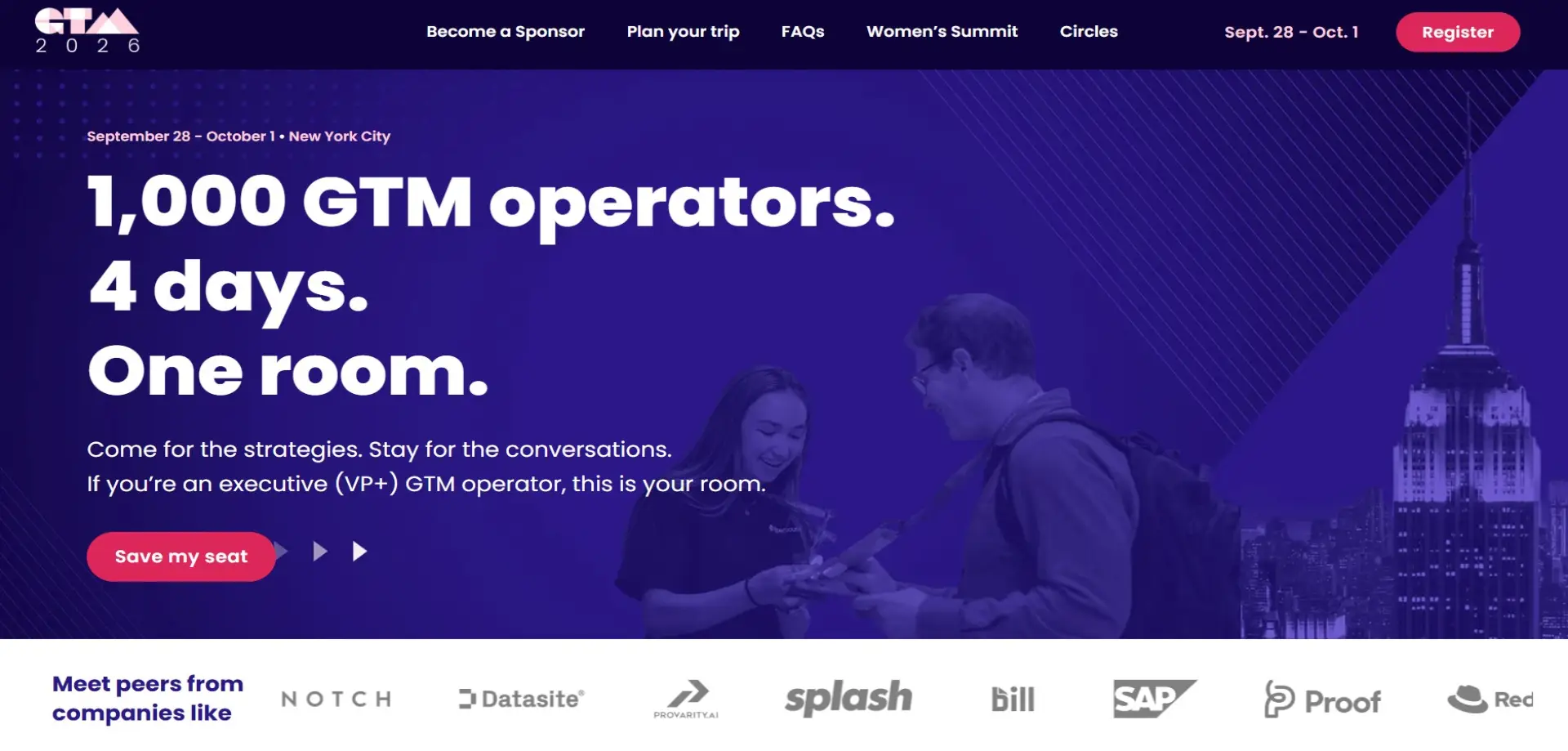
The Pavilion GTM Summit is held in the United States, typically in Las Vegas or another major conference hub, and usually takes place in the first half of the year. It is organised by Pavilion, the private membership community for revenue leaders, and brings together senior go-to-market professionals from across SaaS and B2B technology.
Its timing makes it a key mid-year inflection point for GTM leaders reassessing pipeline performance, sales strategy, and revenue execution.
Why it has become a revenue leadership focal point
Unlike broad SaaS conferences, the Pavilion GTM Summit is explicitly built around go-to-market execution. The positioning is intentional: it focuses less on high-level industry narrative and more on the practical mechanics of building predictable revenue engines.
The event reflects how SaaS has matured. Growth is no longer treated as a single function, but as a tightly integrated system involving sales, marketing, customer success, RevOps, and partnerships. The summit is structured around that reality, making it highly relevant for organisations scaling beyond early traction into repeatable revenue.
It is especially valued for its candid discussions around what is and is not working in modern SaaS GTM motions.
The seniority and decision-making profile of attendees
The Pavilion community is known for its senior operator base, and the summit reflects that same composition.
Typical attendees include:
- Chief Revenue Officers
- VP Sales and Sales Directors
- Chief Marketing Officers
- Revenue Operations leaders
- Customer Success executives
- GTM strategy and enablement leaders
- SaaS founders and CEOs
- Growth-stage investors and advisors
The emphasis is heavily weighted toward people directly accountable for revenue outcomes rather than generalist attendees.
Where the event creates tangible commercial impact
Pavilion GTM Summit is very clearly focused on how revenue organisations actually operate when they are under pressure to deliver predictable growth.
Pipeline consistency is a recurring theme, but not in an abstract sense. The discussions tend to focus on how teams build systems that make revenue forecasting more reliable and less dependent on individual performance spikes.
There is also a strong emphasis on cross-functional execution. Marketing, sales, customer success, and RevOps are usually discussed as parts of one system rather than separate departments with different goals.
Many attendees use the event as a reference point for how more mature SaaS organisations structure their GTM engines in practice.
The result is often a more operational view of revenue — less about ambition, more about repeatability.
The format and style of content delivery
The summit is intentionally structured around practitioner insight rather than theoretical frameworks.
Common formats include:
- Revenue leader roundtables
- GTM strategy workshops
- Operator-led case studies
- Peer-to-peer discussion sessions
- Tactical RevOps deep dives
- Closed-door executive sessions
- Networking events for senior revenue leaders
The closed, membership-driven nature of Pavilion also influences the tone, encouraging more candid and operationally focused discussions.
Best suited for
The Pavilion GTM Summit is especially useful for:
- SaaS companies scaling revenue operations
- Enterprise and mid-market sales organisations
- Chief revenue officers and GTM executives
- Revenue operations and enablement teams
- Founders focused on scaling predictable revenue
- Growth-stage SaaS companies refining GTM strategy
For organisations prioritising revenue predictability and execution excellence, the Pavilion GTM Summit offers one of the most operator-heavy and commercially focused environments in the SaaS event landscape.
9. UNBOUND
Location and timing
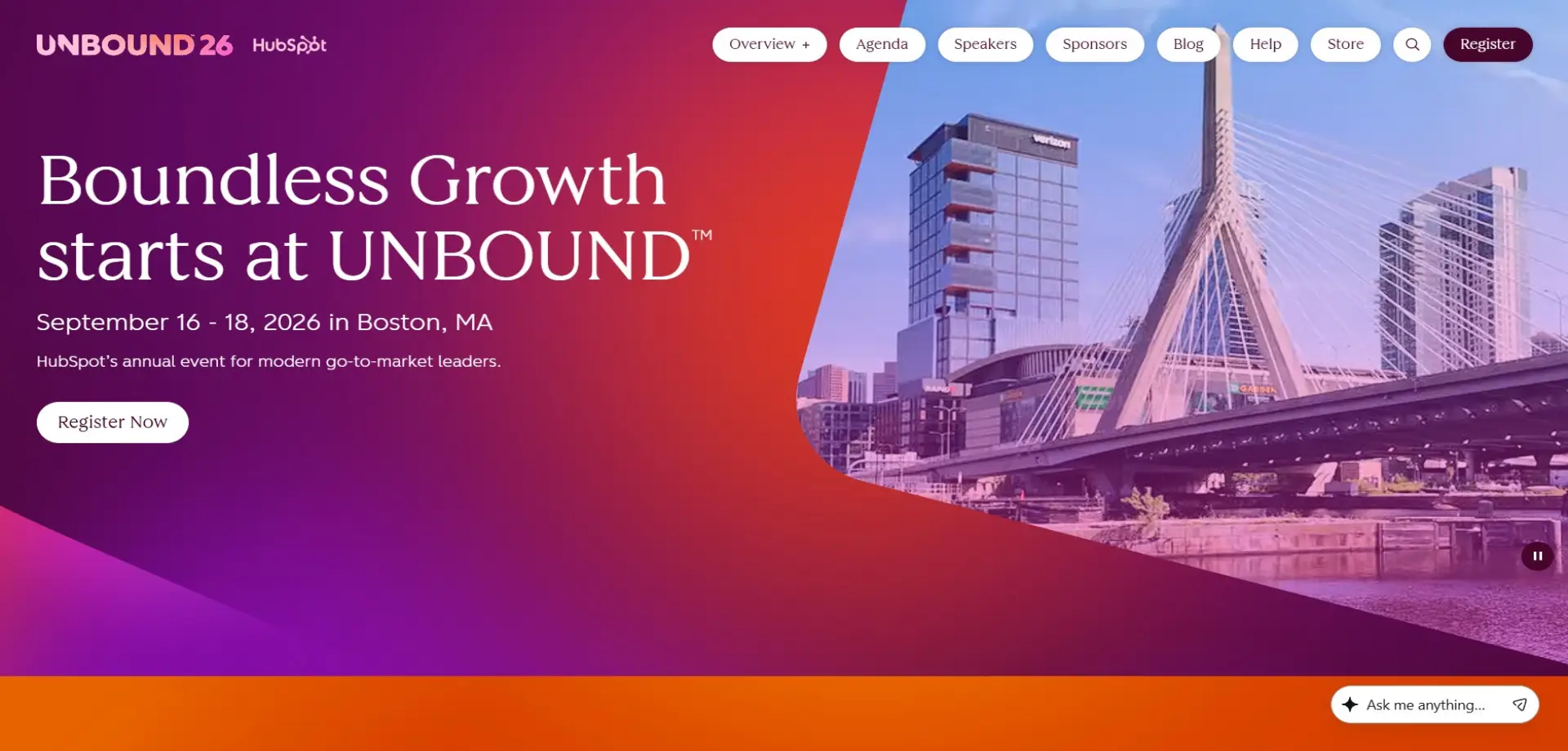
UNBOUND is held in the United States, typically in Boston, Massachusetts, and usually takes place in early autumn (September). Organised by HubSpot, it has grown into one of the largest marketing, sales, and customer experience events globally, with a strong emphasis on inbound methodology and modern customer acquisition.
Its timing aligns with planning cycles for the final quarter of the year, making it particularly relevant for organisations refining marketing strategy, demand generation plans, and customer engagement models.
Why it remains a benchmark for modern B2B marketing and SaaS growth
UNBOUND has evolved beyond its origins as a marketing conference into a broader ecosystem event for SaaS companies focused on scalable, customer-centric growth. While it is strongly associated with inbound marketing principles, its relevance now extends across sales, service, AI-driven automation, and customer experience.
What keeps UNBOUND relevant in a crowded event landscape is its ability to consistently reflect how buyer behaviour is changing. The sessions tend to mirror shifts in how customers discover, evaluate, and adopt SaaS products, particularly in self-serve and digitally led motions.
It is also one of the more commercially polished events on the calendar, with a strong emphasis on product evolution, platform strategy, and ecosystem expansion.
The mix of professionals in attendance
UNBOUND draws a broad but commercially focused audience, with a strong concentration of marketing, sales, and customer experience leaders.
Typical attendees include:
- SaaS founders and executive teams
- Chief marketing officers and marketing leaders
- Demand generation and growth marketers
- Sales and revenue leaders
- Customer success and support teams
- Product marketers and lifecycle specialists
- HubSpot ecosystem partners and agencies
- Technology vendors and integration partners
The scale of attendance makes it one of the most diverse SaaS-adjacent events, while still maintaining a clear focus on go-to-market execution.
Where SaaS companies extract practical value
UNBOUND works at a different scale compared to most SaaS events, but the most useful insights still come down to how companies manage the full customer journey.
Marketing and sales alignment is a consistent thread, particularly around how digital-first buyers move from awareness to decision without traditional hand-holding from sales teams.
Lifecycle strategy plays a big role in the discussions, especially around onboarding, retention, and expansion. Increasingly, AI and automation are being woven into these workflows, not as standalone innovation topics but as practical tools for efficiency.
For most SaaS teams, the real benefit is seeing how larger organisations are structuring these systems at scale and translating that into more refined internal execution.
The experience and session structure
UNBOUND is known for its high production quality and structured learning environments, combining large-scale keynotes with highly practical breakout sessions.
Common formats include:
- High-profile keynote presentations
- Tactical marketing and sales workshops
- Product roadmap and platform sessions
- Customer success and lifecycle discussions
- AI and automation-focused deep dives
- Partner ecosystem showcases
- Networking activations and community events
The event balances inspiration with execution-focused learning, particularly in areas tied to marketing and revenue growth.
Best suited for
UNBOUND’s main audience includes:
- B2B SaaS marketing teams
- Demand generation and growth leaders
- Revenue and sales organisations
- Customer success and lifecycle teams
- SaaS companies using inbound or PLG motions
- HubSpot ecosystem users and partners
For organisations focused on scaling customer acquisition and improving conversion efficiency, UNBOUND remains one of the most influential and widely recognised events in the SaaS and B2B marketing space.
10. Web Summit
Location and timing
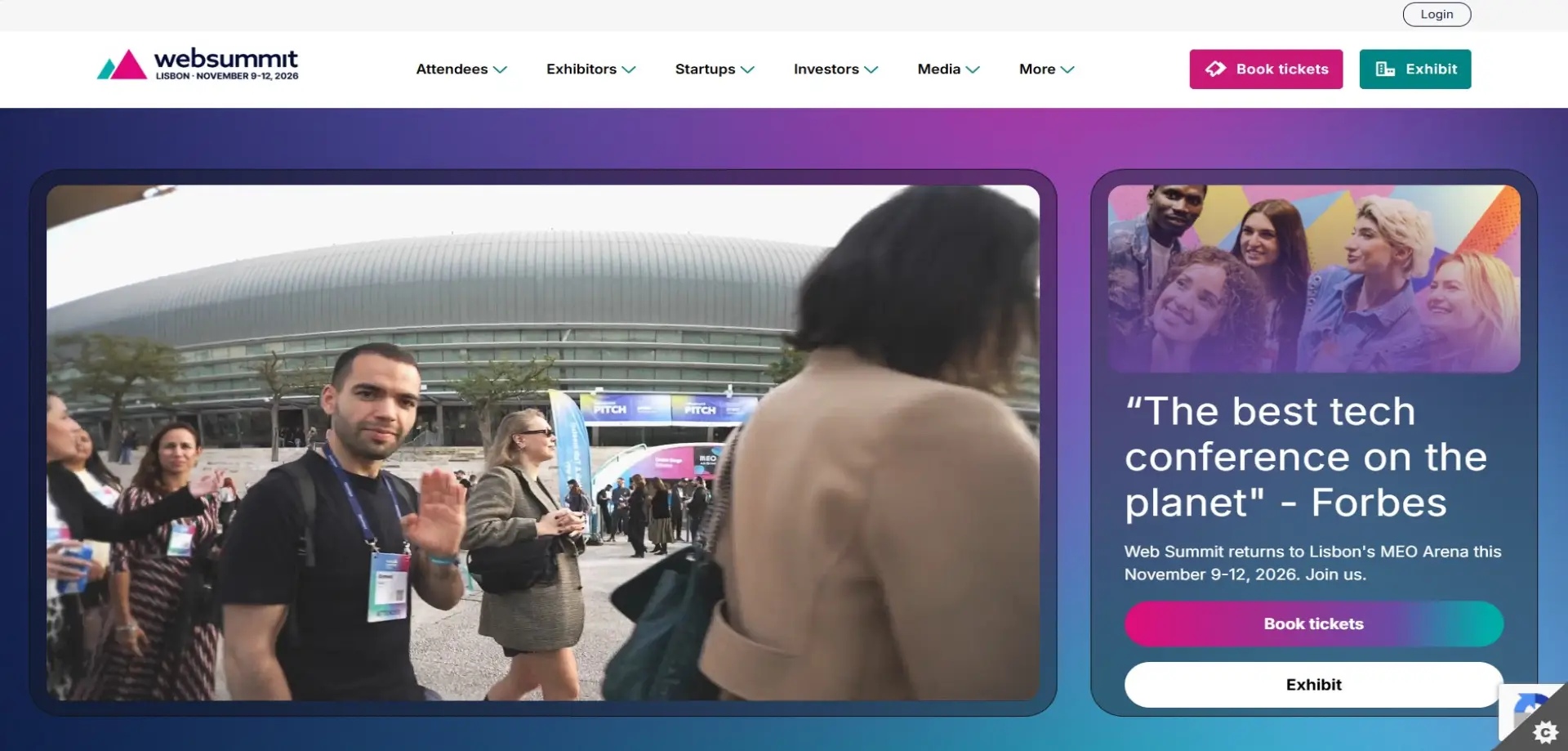
Web Summit is held in Lisbon, Portugal, typically in November each year. It is one of the largest technology conferences in the world, drawing attendees from startups, scale-ups, investors, enterprise technology firms, and global media.
Its end-of-year timing makes it a major convergence point for deal-making, fundraising conversations, partnership discussions, and strategic planning ahead of the following year.
Why it dominates the broader SaaS and tech conversation
Web Summit is not a pure SaaS event, but its influence on the SaaS ecosystem is significant due to its scale and international reach. It functions as a global marketplace for technology, where SaaS companies sit alongside AI, fintech, cloud infrastructure, and consumer tech.
Its value lies less in niche tactical depth and more in macro-level exposure. For SaaS companies, especially those seeking international visibility, Web Summit offers access to audiences that are difficult to reach through SaaS-specific conferences alone.
It is also one of the strongest events for observing where capital, attention, and innovation are moving across the global tech landscape.
The diversity and seniority of attendees
Web Summit brings together one of the most diverse attendee bases in the technology industry.
Typical participants include:
- SaaS founders and startup executives
- Global technology CEOs and senior leaders
- Venture capital and private equity investors
- Corporate innovation and digital transformation teams
- Enterprise software buyers and procurement leaders
- Media, analysts, and industry commentators
- Government and policy stakeholders
- Growth and marketing professionals
The breadth of attendance makes it one of the most high-density networking environments in global tech.
Where SaaS companies refine their strategy
Web Summit operates less like a SaaS conference and more like a global technology crossroads, which is exactly where its strategic value comes from.
Instead of going deep on SaaS-specific execution, it exposes companies to broader movements in capital, innovation, and enterprise technology. That wider lens is often useful for understanding where the industry is heading beyond immediate tactical concerns.
For SaaS companies, the biggest opportunity tends to be visibility and positioning. It’s a place to meet international partners, investors, and enterprise stakeholders who are often outside their usual network.
A lot of the value comes from conversations that extend beyond existing markets — exploring expansion, partnerships, and how the company fits into a global technology narrative.
The scale and structure of engagement
Web Summit operates at a significantly larger scale than most SaaS-focused conferences, with multiple simultaneous tracks and parallel programming streams.
Common formats include:
- Large-scale keynote presentations
- Industry-specific stage tracks
- Startup pitch competitions
- Investor matchmaking sessions
- Policy and regulation panels
- Corporate innovation showcases
- Networking lounges and curated meeting spaces
Because of its scale, attendees often plan meetings well in advance, making structured networking as important as the formal agenda.
Best suited for
Web Summit is a strong match for:
- SaaS companies seeking global exposure
- Startups preparing for fundraising
- Scale-ups entering new international markets
- Enterprise software vendors
- Investors and venture capital firms
- Corporate innovation teams
- Companies building global partnerships
For SaaS organisations aiming to position themselves on a global stage, Web Summit remains one of the most influential and visible events in the broader technology ecosystem.
Location and timing
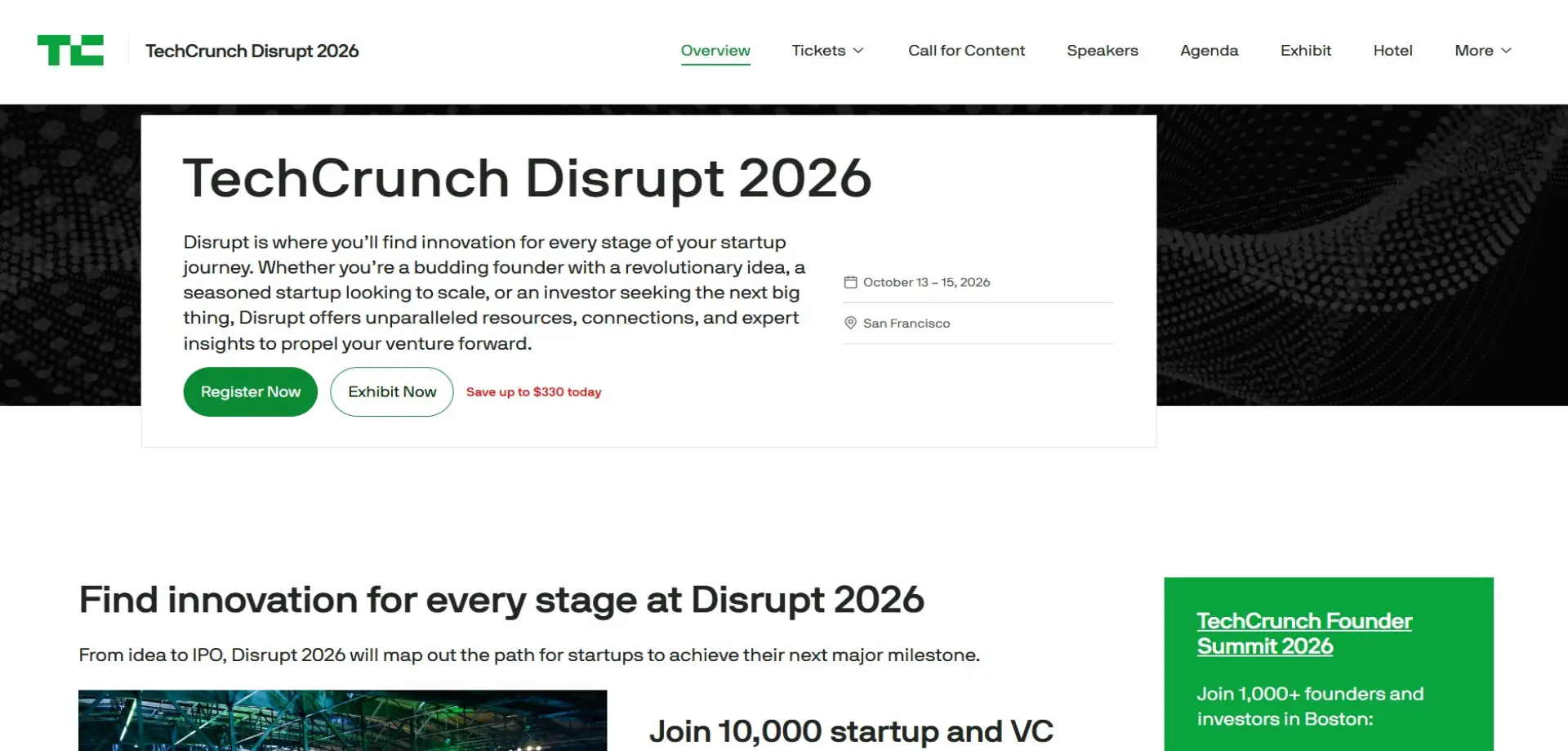
TechCrunch Disrupt is held in the United States, typically in San Francisco, California, and usually takes place in the autumn (September). It is one of the most established startup and venture capital events globally, with a strong focus on early-stage innovation, fundraising, and emerging technology trends.
Its timing aligns with the final fundraising and strategic push of the year, making it a key moment for startups seeking capital, visibility, and early commercial traction.
Why it remains a defining event for startups and early SaaS companies
TechCrunch Disrupt has long been associated with early-stage company building and venture capital discovery. While it is not exclusively a SaaS event, SaaS companies consistently dominate a large portion of the startup battlefield and exhibition floors.
The event’s enduring relevance comes from its role as an early signal of where innovation is heading. Many now-established SaaS companies first gained visibility through Disrupt’s startup battlefield or early-stage showcases, making it a credible proving ground for emerging software businesses.
Unlike operator-heavy SaaS conferences, Disrupt is more oriented towards company formation, product-market validation, and investor engagement at the earliest stages of growth.
The investor-founder ecosystem in attendance
The attendee mix is heavily weighted toward venture capital, startups, and early-stage ecosystem players.
Typical attendees include:
- Early-stage SaaS founders and startup teams
- Seed and Series A–focused investors
- Venture capital partners and associates
- Startup accelerators and incubators
- Corporate venture capital teams
- Tech journalists and industry media
- Product and growth leaders from emerging companies
- Ecosystem service providers (legal, advisory, tooling)
This creates a highly competitive, deal-driven environment centred on funding, visibility, and early traction.
Where SaaS companies gain the most leverage
TechCrunch Disrupt is heavily driven by early-stage energy, where funding conversations and product storytelling happen in the same environment.
Startups often use it as a moment to sharpen their narrative in front of investors and media at the same time, which can quickly amplify visibility if the positioning lands well.
The presence of active venture capital also makes it a high-intensity environment for fundraising conversations. Feedback tends to come quickly and directly, which helps founders refine both their pitch and their understanding of market fit.
Beyond funding, there is value in exposure — seeing how other early-stage companies are positioning themselves and how investors are reacting to new categories as they emerge.
The format and competitive structure of the event
Disrupt is structured around a mix of competitive pitching and high-profile stage content.
Common formats include:
- Startup Battlefield competition
- Founder pitch sessions
- Investor Q&A panels
- Product launch showcases
- Fireside chats with tech leaders
- Media interviews and press briefings
- Networking sessions with investors and founders
The Startup Battlefield in particular remains one of the most visible launchpads for early-stage SaaS companies seeking global recognition.
Best suited for
TechCrunch Disrupt is most effective for:
- Early-stage SaaS startups (pre-seed to Series A)
- Founders seeking venture capital funding
- Product teams validating new SaaS categories
- Investors focused on early-stage deal flow
- Startups preparing for market entry or expansion
- Companies seeking media visibility and brand awareness
For SaaS companies at the earliest stages of growth, TechCrunch Disrupt remains one of the most important global stages for securing funding, visibility, and early traction within the broader startup ecosystem.
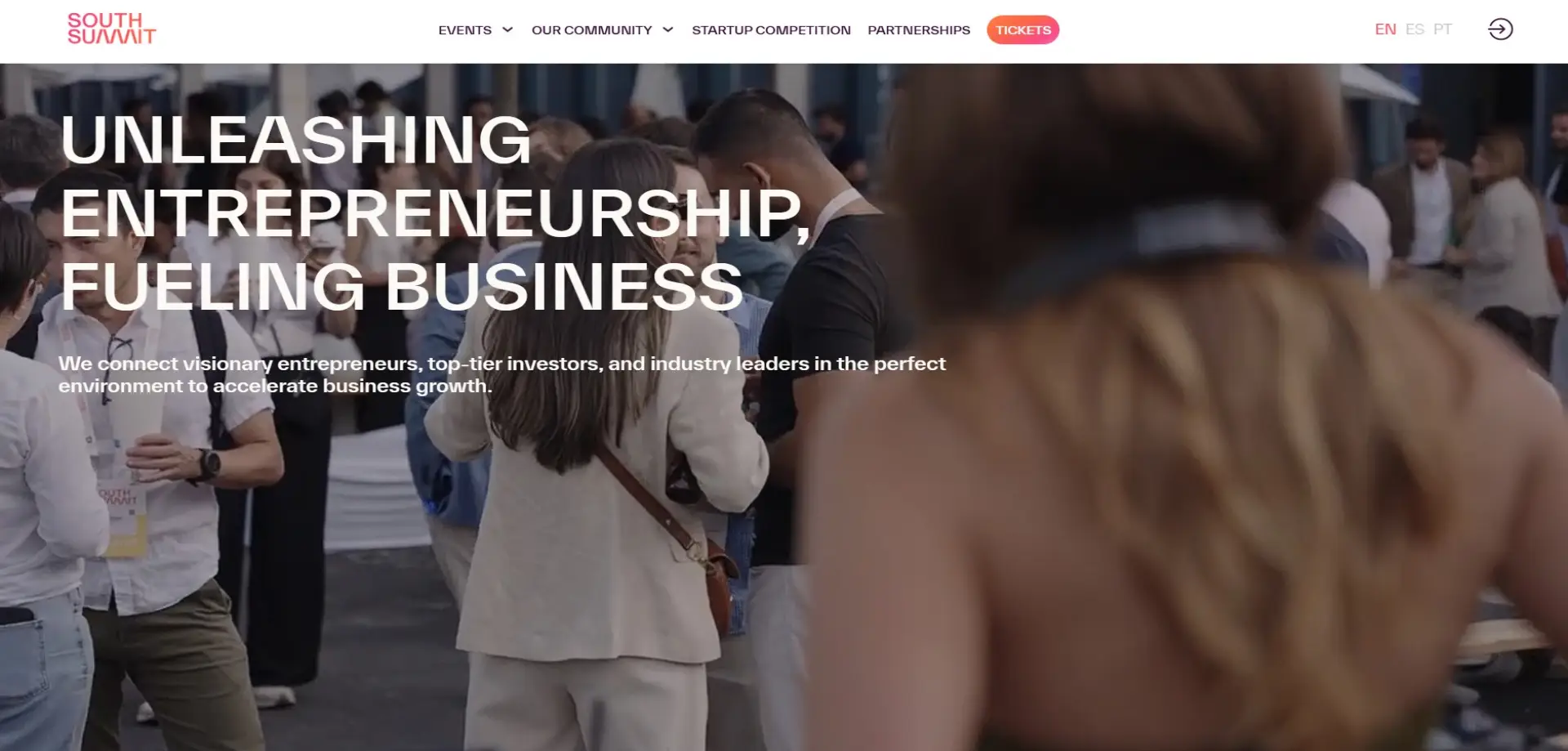
12. South Summit
Location and timing
South Summit is held in Madrid, Spain, typically in late spring or early summer (usually June). It has become one of Southern Europe’s most important innovation and startup events, attracting founders, investors, corporates, and ecosystem builders from across Europe, Latin America, and increasingly, North America.
Its timing positions it as a mid-year global startup checkpoint, often used for investor meetings, partnership development, and international expansion planning.
Why it is a key gateway between European and Latin American SaaS ecosystems
South Summit stands out because it sits at a genuine crossroads between European and Latin American innovation ecosystems. While many SaaS conferences are regionally anchored, this event has built a reputation for connecting high-growth startups with cross-border investment and expansion opportunities.
For SaaS companies, this matters because Latin America represents one of the fastest-growing SaaS adoption markets, while Southern Europe continues to produce a strong pipeline of early-stage and growth-stage software companies. South Summit bridges those two dynamics in a way few other events do.
It is less about polished enterprise SaaS playbooks and more about emerging opportunity, cross-border scaling, and early internationalisation.
The ecosystem represented at the event
The attendee base is highly international and heavily focused on startups and venture capital activity.
Typical attendees include:
- Early and growth-stage SaaS founders
- Venture capital investors from Europe and Latin America
- Corporate innovation and digital transformation teams
- Startup accelerators and incubators
- Government and economic development agencies
- Scale-up CEOs and operators
- Product and growth leaders
- Technology partners and ecosystem enablers
This mix creates a strong emphasis on funding, expansion, and cross-market collaboration.
Where SaaS companies turn insight into growth
South Summit creates value through its ability to connect ecosystems that don’t always overlap in a structured way, particularly Europe and Latin America.
That cross-regional dynamic often shifts the focus away from local optimisation and towards broader expansion thinking. Conversations tend to revolve around entering new markets, forming cross-border partnerships, and understanding how SaaS adoption differs across regions.
Investors and founders use the event to explore opportunities outside their immediate geography, which often leads to more globally oriented growth strategies.
For many SaaS companies, the main benefit is perspective — a clearer view of where future demand might come from and how positioning may need to adapt across different markets.
The structure and style of engagement
South Summit blends startup competition formats with investor-heavy programming and curated networking.
Common formats include:
- Startup competition and pitching sessions
- Investor-founder matchmaking meetings
- Global innovation panels
- Corporate innovation showcases
- Sector-focused breakout sessions
- Networking events and curated meetings
- Ecosystem and policy discussions
The event places strong emphasis on structured introductions, making it particularly effective for deal-making and cross-border collaboration.
Best suited for
South Summit tends to suit best:
- Early-stage SaaS startups seeking funding
- Growth-stage companies exploring international expansion
- Venture capital firms focused on cross-border investment
- Corporate innovation teams
- SaaS founders targeting European or Latin American markets
- Ecosystem builders and accelerators
For SaaS organisations looking to expand internationally or raise capital in emerging innovation hubs, South Summit offers a uniquely global and growth-oriented environment within the broader startup and SaaS ecosystem.
The real value of SaaS events is execution, not attendance
Across all of these events, a clear pattern emerges: the value is rarely in the keynote stage, and almost always in what happens around it. The companies that benefit most are not simply attending for visibility, but actively using these environments to refine how they build pipeline, structure revenue teams, position products, and expand into new markets.
Some events accelerate fundraising conversations, others sharpen go-to-market execution, and a smaller number help teams recalibrate their entire revenue model. But in every case, the advantage comes from proximity — to operators solving similar problems, to buyers actively evaluating solutions, and to investors tracking where categories are heading next.
Seen together, these conferences function less as isolated industry gatherings and more as strategic infrastructure for the SaaS ecosystem. The companies that treat them that way tend to leave with stronger partnerships, clearer positioning, and more disciplined execution frameworks.
For SaaS organisations looking to turn event participation into measurable growth rather than passive brand exposure, reach out to Munro Agency to build a clearer event strategy, sharpen go-to-market messaging, and convert industry visibility into qualified pipeline.
Frequently Asked Questions
The most important B2B SaaS events include SaaStr Annual, SaaStock, UNBOUND, Web Summit, TechCrunch Disrupt, B2BMX, SaaSiest, Slush, TNW Conference, SubSummit, Pavilion GTM Summit, and South Summit. Each serves a different purpose, from early-stage fundraising and startup visibility to enterprise GTM execution, revenue operations, and international expansion. The most valuable events are those aligned with a company’s growth stage and commercial priorities rather than scale alone.
TechCrunch Disrupt and South Summit are among the strongest events for fundraising conversations, particularly at early stages. TechCrunch Disrupt concentrates venture capital, media attention, and startup visibility in one environment, while South Summit connects founders with international investors across Europe and Latin America. SaaStr Annual also plays a major role for growth-stage SaaS companies seeking investor access alongside operator insights.
Pavilion GTM Summit, B2BMX, and UNBOUND are the most relevant for go-to-market and revenue-focused teams. These events concentrate heavily on pipeline generation, sales and marketing alignment, lifecycle strategy, and revenue operations. The content is strongly execution-oriented, making them particularly useful for organisations focused on improving forecasting accuracy, conversion rates, and customer acquisition efficiency.
European SaaS events such as SaaStock, SaaSiest, Slush, and South Summit offer significant value, particularly for companies operating in or expanding into European and adjacent markets. While US-based events often have greater scale and investor concentration, European conferences tend to be more operator-focused and practical, with stronger emphasis on sustainable growth, capital efficiency, and cross-border expansion within fragmented markets.
Event selection should be driven by commercial objectives rather than popularity. Early-stage companies often benefit most from investor-heavy events like TechCrunch Disrupt or South Summit, while growth-stage SaaS firms typically gain more from execution-focused conferences such as SaaStr Annual, UNBOUND, or Pavilion GTM Summit. The most effective approach is to align each event with a specific goal, such as fundraising, pipeline generation, partnership development, or GTM optimisation.